


Composite Decking vs. Vinyl: Which Is Better for Your Deck?

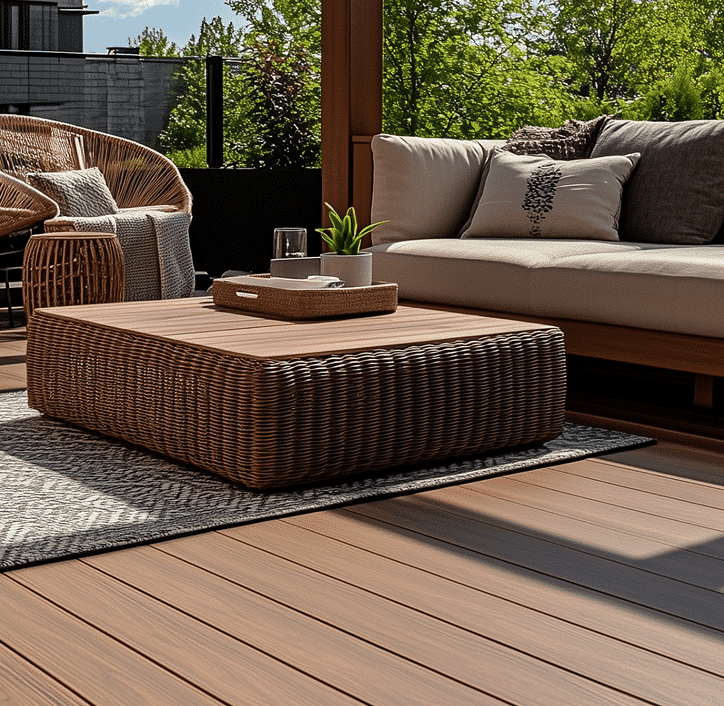
When planning an outdoor living space, choosing the right decking material can have a major effect on its appearance, durability, maintenance requirements and long-term cost. Two popular alternatives to traditional wood are composite decking and Vinyl Decking. Although both are frequently described as Low-Maintenance options, they are made differently and serve different purposes.
Vinyl can be an effective solution when a completely waterproof surface is required, particularly for balconies and elevated decks protecting a finished area below. For most residential backyard projects, however, composite offers a more natural appearance, greater design flexibility and the solid feel homeowners expect from a premium deck.
FiberWood composite combines reclaimed wood fibers with recycled plastic to create boards designed for Canadian weather.
1. What Is Composite Decking?
Composite decking is an engineered material made from a combination of wood fibres, plastic and performance-enhancing additives. Instead of harvesting boards directly from trees, manufacturers blend these ingredients and form them into consistent composite boards.
The plastic portion may include polyethylene, polypropylene or other durable polymers. The wood fibre gives the product greater density and contributes to the warm, authentic appearance that differentiates composite from fully synthetic materials.
Premium composite decking boards also include protective capping. This exterior layer helps shield the core from moisture, fading, stains, scratches and ordinary wear. FiberWood boards are protected on all sides and designed to withstand snow, rain, summer heat and repeated seasonal changes.
How Composite Boards Are Manufactured
The manufacturing process begins by combining recycled plastic, reclaimed wood fibers, pigments and binding agents. The ingredients are heated and formed into decking boards with consistent dimensions and performance.
The surface is then embossed to produce a realistic grain pattern. Different shades and subtle variations can be introduced to reproduce the aesthetics of natural wood without the knots, splintering and irregularities associated with wooden decking.
The Wood Fibers
Wood fibers help give composite a substantial feel underfoot and a more authentic appearance than many PVC deck boards or vinyl membranes. They contribute to the visual depth homeowners expect from quality wood decking while allowing the product to use reclaimed wood that might otherwise become waste.
The Protective Capstock
Capstock is a durable polymer layer applied around the composite core. High-quality capped composites use this protection to improve moisture resistance, stain resistance and durability.
FiberWood’s Proshield Premium protection covers all four sides of its boards, including the grooves. This capping helps protect against UV exposure, scratches, insects and moisture while reducing the maintenance required over the life of the deck.
2. What Is Vinyl Decking?
Vinyl Decking generally refers to a flexible PVC membrane installed over a smooth plywood surface. The membrane is made primarily from polyvinyl chloride and is attached to the substrate before its seams are heat-welded.
Vinyl Decking should not be confused with rigid PVC decking. A PVC membrane is a flexible sheet installed over plywood. PVC deck boards and Advanced PVC decking are solid or semi-solid profiles installed over structural joists, much like composite decking boards.
Vinyl Membranes Compared With PVC Deck Boards
A vinyl membrane creates a continuous surface intended for waterproofing decks. Water drains toward an edge, scupper or drainage system rather than passing between individual boards.
PVC decking consists of separate boards made from plastic. These boards are fastened over joists with spacing between them, allowing rainwater to flow through the deck surface.
Why This Distinction Matters
The right material depends on the purpose of the structure. When a deck acts as a roof over a finished room, garage or storage area, a properly installed waterproof membrane may be necessary.
For a conventional backyard deck, composite boards usually provide a more familiar appearance, easier ventilation and greater design flexibility. They can also be integrated naturally with stairs, borders, deck railings and other outdoor features.
Contact FiberWood today for help choosing the right composite decking.
Explore FiberWood colours and finishes to create a durable deck.
3. Composite Decking vs. Vinyl
Both materials eliminate much of the recurring work associated with pressure-treated wood, but they do not offer the same benefits.
- Appearance: Composite provides realistic wood textures and richer colour variation.
- Waterproofing: Vinyl creates a continuous waterproof surface when correctly installed.
- Durability: Both are durable, but capped composite is well suited to active residential spaces.
- Maintenance: Neither requires regular staining, sealing or re-painting.
- Installation: Composite is installed over joists, while vinyl normally requires plywood.
- Repairability: An individual composite board can often be replaced separately.
- Design flexibility: Composite works well with borders, stairs, fences and railings.
- Comfort: Composite generally feels more substantial and natural underfoot.
- Cost: Pricing depends on the product, structure, labour and waterproofing requirements.
Vinyl holds an advantage when waterproofing is the project’s primary requirement. Composite offers the stronger overall balance when homeowners want an attractive, versatile and low-maintenance backyard deck.
4. Composite Provides More Natural Aesthetics
A deck is often one of the largest visual elements in a backyard. Its material should complement the home, landscaping, furniture and surrounding building materials.
Vinyl membranes are available in different colours and printed patterns, but their appearance is generally flatter and more repetitive. Even quality PVC vinyl can look more like a surface covering than individual wood boards.
Composite provides greater visual depth through embossed textures, two-tone colouring and realistic grain patterns. FiberWood offers brushed finishes and woodgrain textures intended to complement both contemporary and traditional outdoor designs.
A More Authentic Wood Appearance
Composite is designed to deliver the aesthetic appeal of natural wood without many of its disadvantages. Homeowners can obtain the visual warmth of tropical hardwoods or stained lumber without needing to re-stain the surface every few years.
The separate boards also create the lines and proportions expected from traditional wood decking. Composite can therefore coordinate naturally with brick, stone, siding, pergolas, Aluminum components and landscaped areas.
Greater Design Flexibility
Composite boards can be arranged in straight, diagonal or framed patterns. Contrasting colours may be used to create picture-frame borders, define stairs or separate different zones of the deck.
Boards can also be routed for hidden fasteners, producing a clean surface without rows of visible screws. This gives designers more freedom when planning stairs, benches, deck railings, privacy screens or matching composite fences.
5. Durability in Canadian Weather
Canadian decks must tolerate rain, snow, ice, strong sunlight and repeated freeze-thaw cycles. The material must also handle furniture, foot traffic, pets and seasonal debris without quickly losing its appearance.
FiberWood composite decking is engineered for Canadian conditions and designed to resist warping, cracking and splintering. Its capped surface improves resistance to fading, moisture and everyday wear.
Unlike pressure-treated lumber, composite does not need regular sealing to protect it against rot and decay. It also avoids the splinters that can develop as pressure treated wood dries and ages.
Moisture, Mold and Weather Resistance
Quality capped composites offer strong resistance to moisture. The protective cap reduces the exposure of the inner material to rain, snow, spills and damp debris.
Composite is not a waterproof membrane, so proper installation remains essential. Correct spacing between boards allows water and debris to drain, while ventilation beneath the deck helps prevent trapped moisture.
Vinyl offers better waterproofing because it creates a continuous membrane. However, its performance depends heavily on the condition of the plywood, welded seams, flashing and transitions. Damage to the membrane can allow water to reach the substrate and potentially cause concealed water damage.
Composite surfaces should also be cleaned periodically to remove leaves, pollen and dirt that could support superficial mold growth. This does not mean the boards require the same maintenance as wood; it simply means no outdoor surface is completely maintenance-free.
Seasonal Movement and Resilience
Composite, vinyl and PVC decking all expand and contract as temperatures change. Manufacturers specify expansion gaps and fastener requirements to accommodate this thermal expansion.
A professional installer should follow the instructions for the exact product being used. Applying specifications from Trex, TimberTech, Fiberon, AZEK or another manufacturer to FiberWood boards may produce incorrect spacing.
Proper joist spacing, appropriate fasteners and adequate ventilation all contribute to long-term resilience. When installed correctly, composite provides a stable and dependable surface for Canadian residential projects.
6. Maintenance and Daily Use
One of the biggest benefits of composite decking is its manageable maintenance schedule. Routine care generally involves removing loose debris and occasionally washing the boards with water, mild soap and a soft brush.
Composite does not require sanding, re-staining, sealing or re-painting. These advantages make it considerably easier to own than traditional wood or FSC-certified tropical lumber.
Vinyl is also considered a low-maintenance material. Its surface can usually be washed using water and an appropriate cleaning product. However, seams, drains, flashing and wall transitions should be checked to confirm that the waterproofing system remains secure.
Sharp objects, metal furniture feet or heavy equipment may puncture or damage a PVC membrane. Composite boards generally provide greater confidence for active family spaces containing barbecues, planters, furniture and outdoor equipment.
Comfort, Safety and Repairs
Composite offers a solid walking surface with textures that can improve traction. When choosing a product, homeowners should review slip-resistance information, warranty conditions, fire ratings and applicable building codes.
Tests such as ASTM E303 or CCMC building code testing may be relevant depending on the product and application. Product documentation should always be consulted rather than assuming that every composite or vinyl option performs identically.
If one composite board is damaged, it may be possible to remove and replace that board. Repairing a vinyl surface can require a visible patch, while investigating water damage beneath a PVC membrane may involve opening a larger area.
7. Installation and Structural Requirements
Composite decking is installed over structural joists in a process similar to traditional wood decking. The framing must be sound, properly spaced and designed to support the selected material.
Grooved composite boards can be installed using hidden fasteners. Borders, stair nosing and solid-edge boards may then be added to create a finished appearance.
A vinyl installation requires a smooth plywood substrate with the correct slope. The installer must carefully detail seams, edges, drains, posts, doors and wall connections to maintain a continuous waterproof layer.
Vinyl installation is therefore highly dependent on substrate preparation and waterproofing expertise. Composite installation also requires skill, but it follows a familiar board-and-joist approach commonly used in the business of building decks and fences.
Which Material Is Better for Renovations?
Composite is often practical when replacing old wooden decking. If the existing joists remain structurally sound and meet the manufacturer’s requirements, the old boards may be removed and replaced with new composite boards.
Converting the same structure to vinyl may require the addition of plywood, slope corrections, drainage modifications and new flashing. Door heights and railing connections may also need to be adjusted.
Every renovation is different, so the structure should be inspected before work begins. In many conventional deck renovations, however, composite provides a more straightforward path from old wood to a modern low-maintenance surface.
8. Cost and Long-Term Value
The initial cost of composite decking is usually higher than entry-level pressure-treated wood. Vinyl pricing varies depending on membrane quality, plywood preparation, labour and the complexity of the waterproofing details.
Comparing only the advertised price of the surface material can be misleading. A complete estimate should consider:
- Structural framing and joists
- Plywood requirements
- Waterproof membrane installation
- Drainage and flashing
- Composite boards and fasteners
- Stairs and deck railings
- Labour costs
- Long-term maintenance
- Potential repairs
- Warranty coverage
The cost of composite decking may provide stronger long-term value because homeowners avoid repeated staining, sealing and replacement of deteriorated lumber. A high-quality composite deck may also increase resale appeal by creating an attractive outdoor space with predictable upkeep.
Comparing Warranty Protection
Warranty terms differ by product line, manufacturer and application. FiberWood currently presents residential decking warranties that vary by collection, with certain products promoted with coverage of up to 50 years.
Homeowners should read the complete warranty rather than focusing only on its duration. Important questions include whether it covers structural failure, abnormal fading, staining, labour and transfer to a future owner.
Vinyl products may offer separate waterproofing warranties, but coverage can depend on approved installation and detailed waterproofing requirements. Composite warranties may similarly require correct joist spacing, ventilation and fastener placement.
9. Why FiberWood Composite Could Be Right For You
Vinyl remains valuable for applications where a deck must protect an occupied or enclosed area below. Its ability to create a continuous waterproof surface is a legitimate advantage.
For most traditional backyard projects, however, FiberWood composite offers a more complete combination of aesthetics, durability, comfort, design freedom and long-term value.
FiberWood composite decking uses recycled plastic and reclaimed wood fibers to produce a realistic alternative to natural lumber. Certain FiberWood lines are manufactured with approximately 90% recycled materials, supporting the reuse of material that might otherwise contribute to landfill waste.
Composite also allows homeowners to coordinate their decking with borders, stairs, aluminum details, railings and fences. Its realistic grain pattern delivers the appearance of wood without the recurring maintenance associated with wooden decking.
For a beautiful, comfortable and low-maintenance backyard deck designed for daily use, FiberWood composite decking is generally the more versatile and attractive choice.